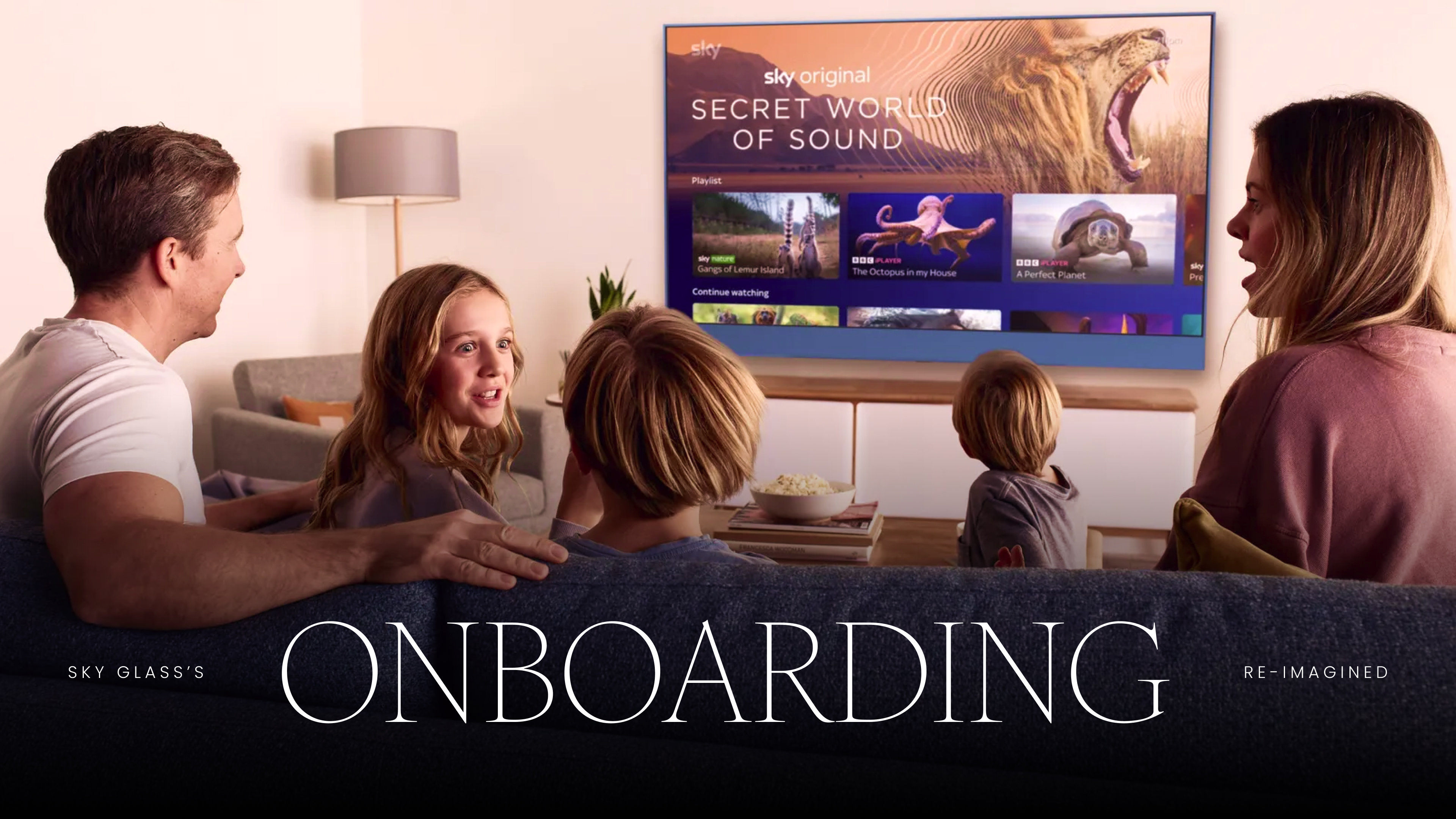
An onboarding designed for the household, not the user. The first all-in-one streaming TV from Sky, set up before it arrived.
Sky Glass was Sky's first all-in-one streaming TV. The brief came with the hardware.
The default setup would have been familiar. A first-run wizard. Twenty checkboxes. Half an hour with the remote pointing at a screen reading legal text in size eight. A delay between owning a Sky Glass and actually being able to watch one.
We took setup out of the arrival entirely. We moved it back, onto the purchase journey itself, where the excitement was already building. The TV got designed during the anticipation, not the wait that came after.
This is what we were moving away from. A dozen on-screen steps after unboxing, plugged through with the remote. Monotonous friction inserted into the most exciting moment a household has with a new product. And the bigger problem sat one layer deeper than that.
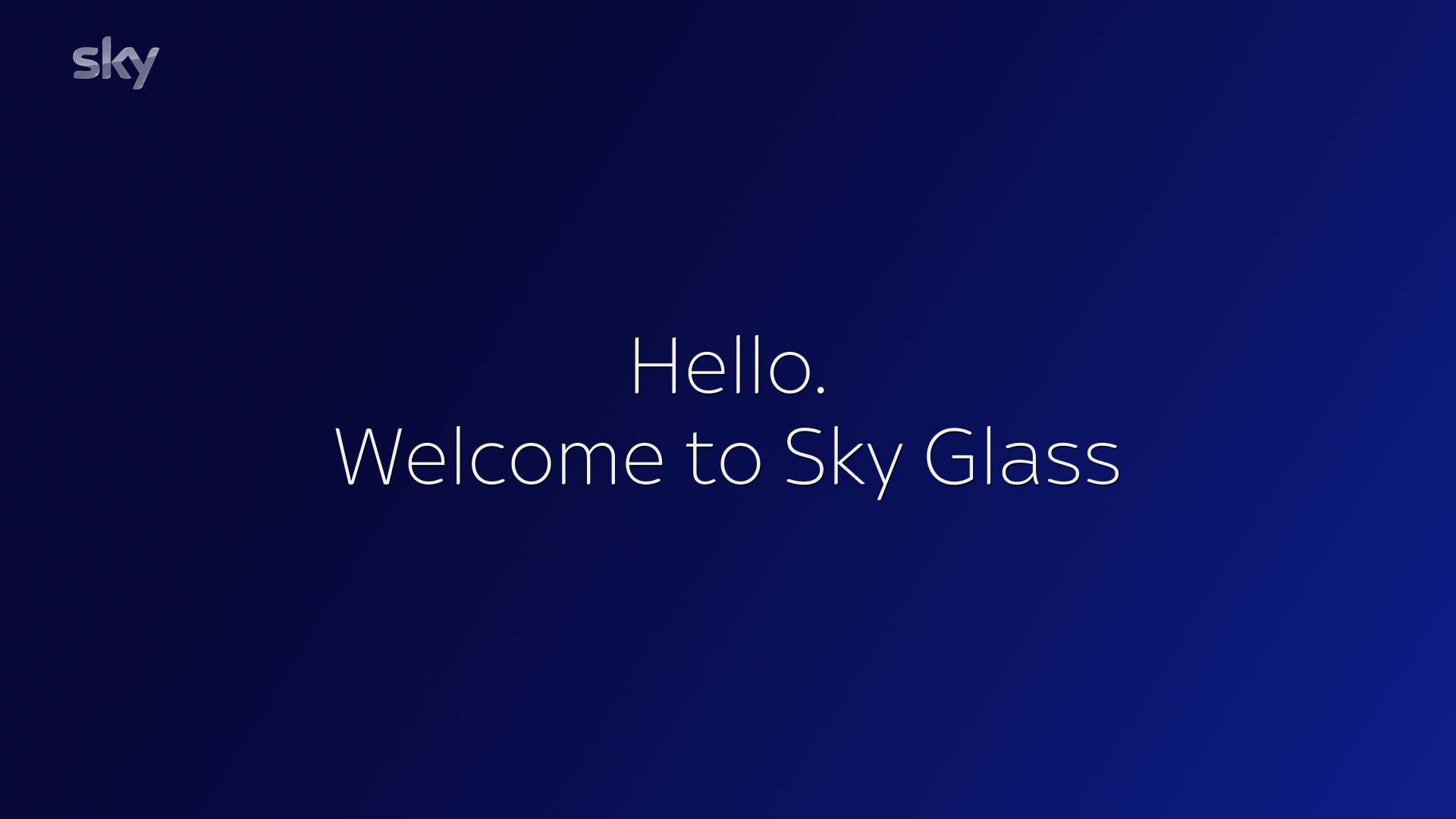 Step 01
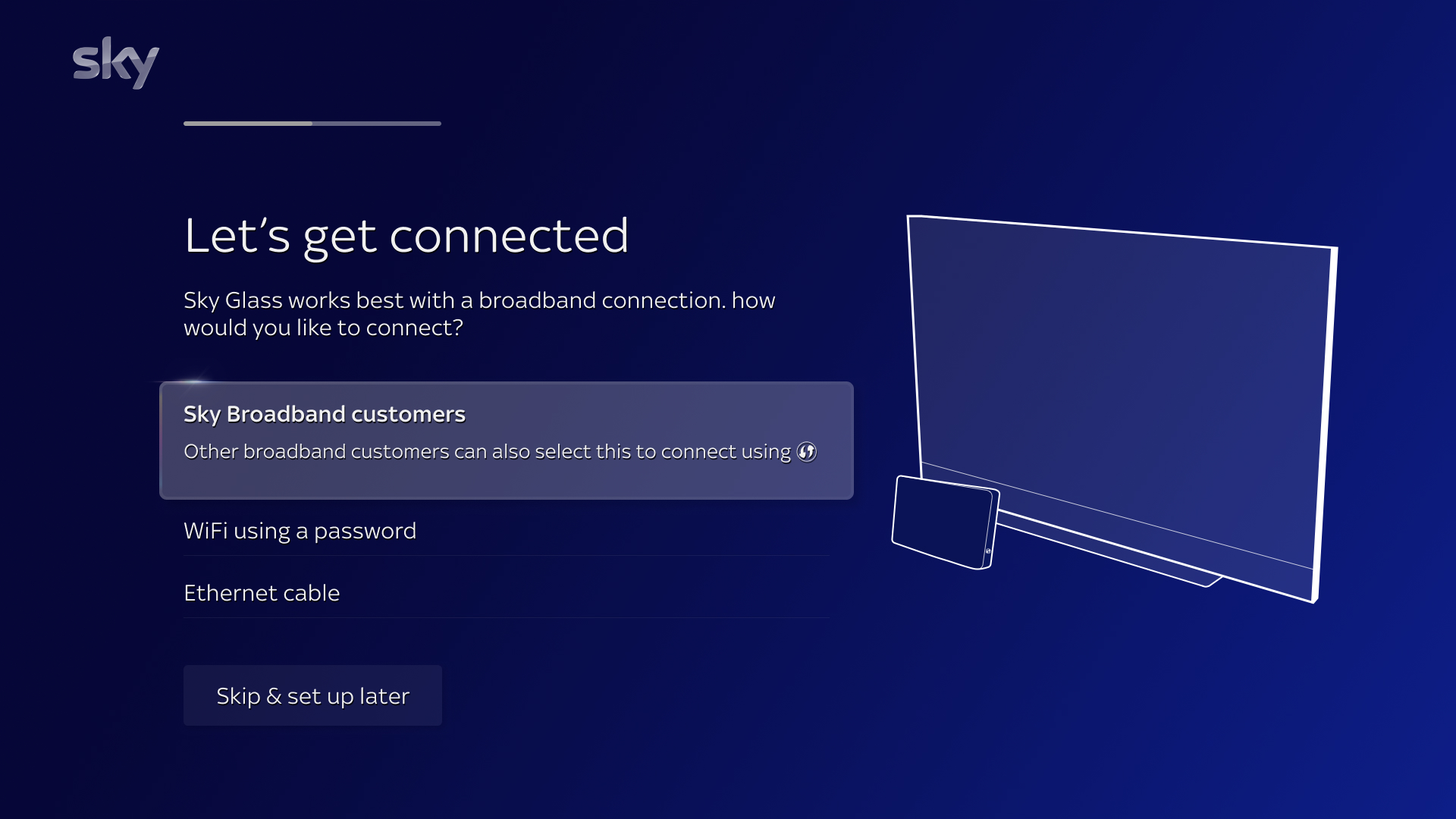 Step 02
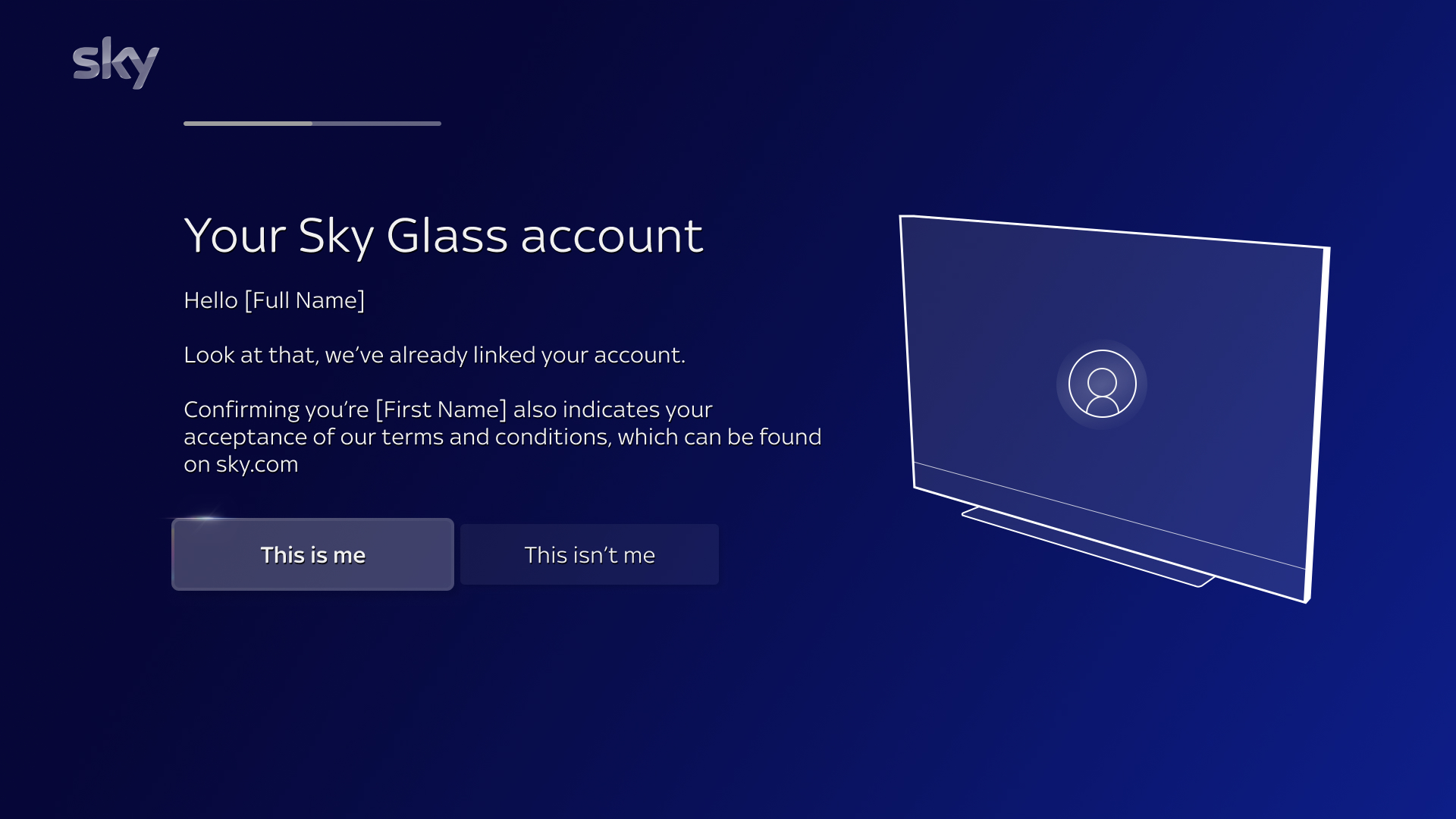 Step 10
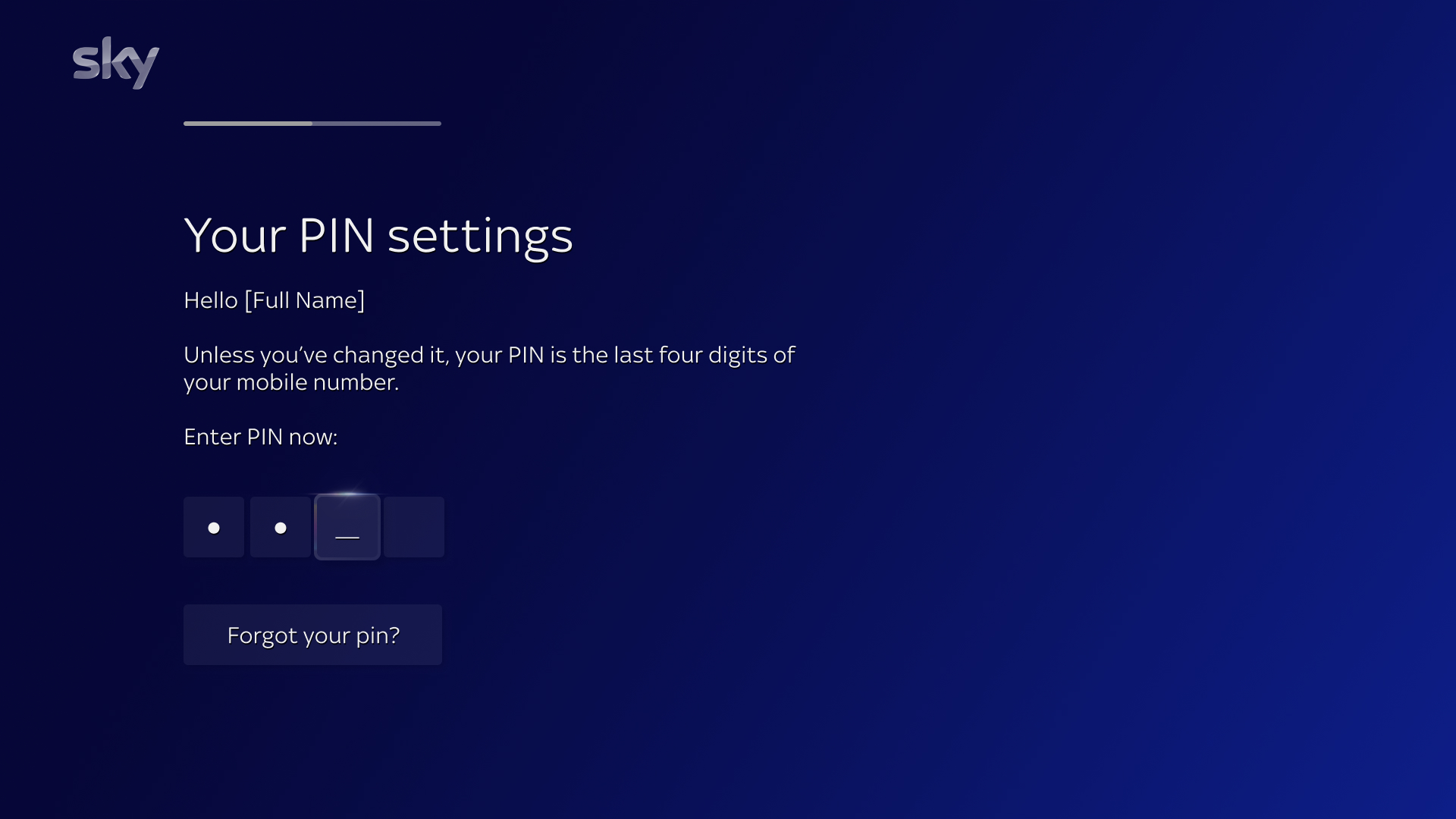 Step 12
The biggest source of friction wasn't the number of steps. It was that the product didn't know who was about to set it up.
A household with a low-vision member needed an engineer to visit and configure the TV. A household with three generations had three different relationships with the remote. A household with one tech-confident person and three who weren't, ended up with a TV configured for one. The setup wasn't broken. It was just designed for an abstract user who did not exist in any actual living room.
We started somewhere unexpected. Not on the TV. On the purchase journey at sky.com.
By the time a household ordered Sky Glass, the brand already knew them. Address, billing details, the package they had selected. We extended that conversation to ask the questions that mattered. Who lives in the home. What their accessibility needs were. Whether anyone preferred audio guidance or larger type. Optional, low-friction, set up as a conversation rather than a form. The household answered while they were still excited about the new TV arriving.
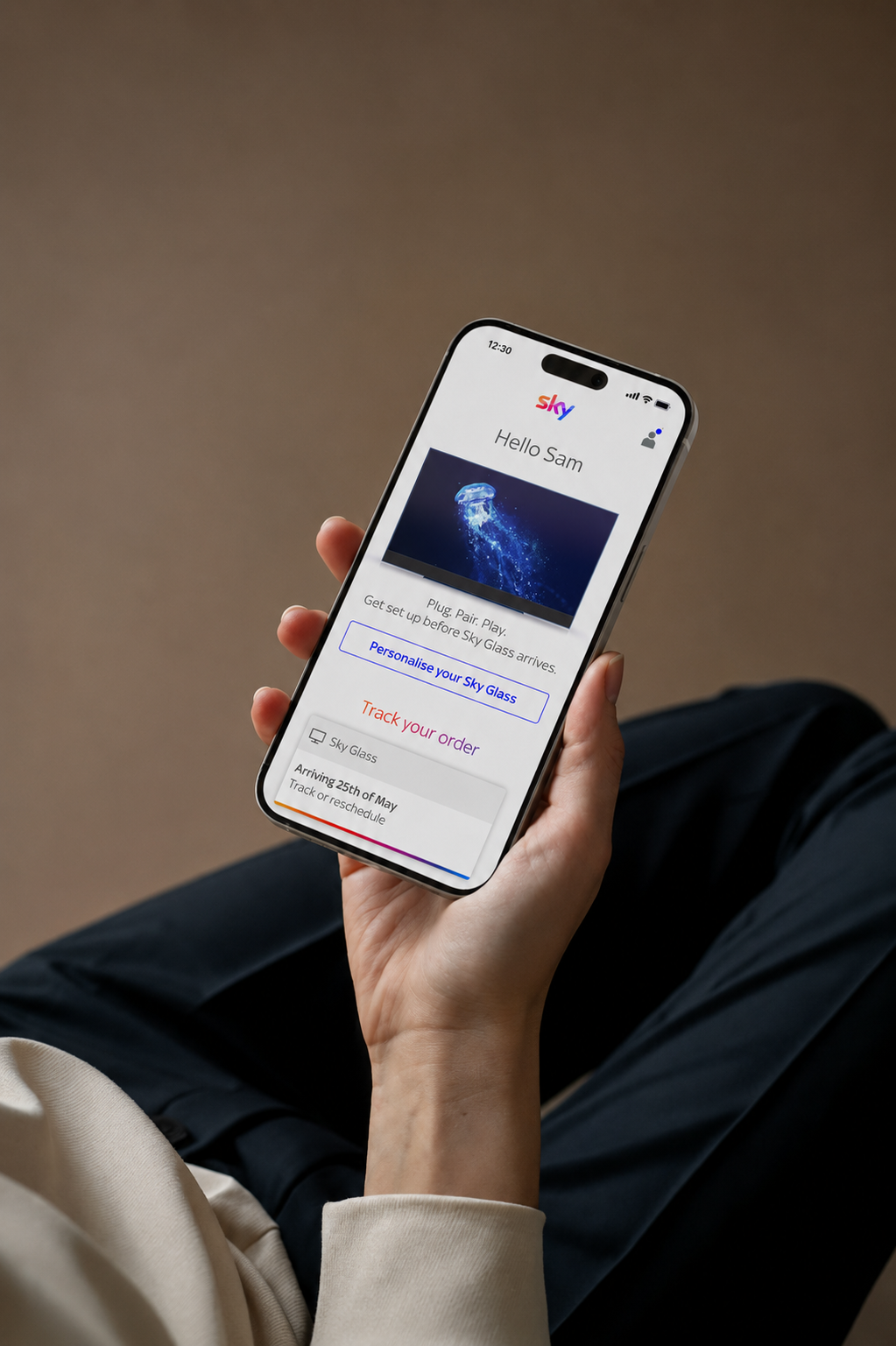
The questions came in the order they actually mattered. Who lives here. What helps. What gets in the way. Asked the way a thoughtful host would ask, not the way a setup wizard does.
By the time the box landed, the TV already knew who was about to plug it in.
A household with a low-vision member arrived to a TV that started in high-contrast mode with audio guidance turned on by default. Not buried three menus deep in settings where the user who needed it most was least likely to find it. A household with multiple profiles arrived to a TV that had those profiles already built. Setup became the moment the box was opened, not the half-hour after.
For households who still wanted an engineer visit, the option remained. But the engineer was now coming to a TV that already knew what the household needed. That changed the conversation in the room entirely.
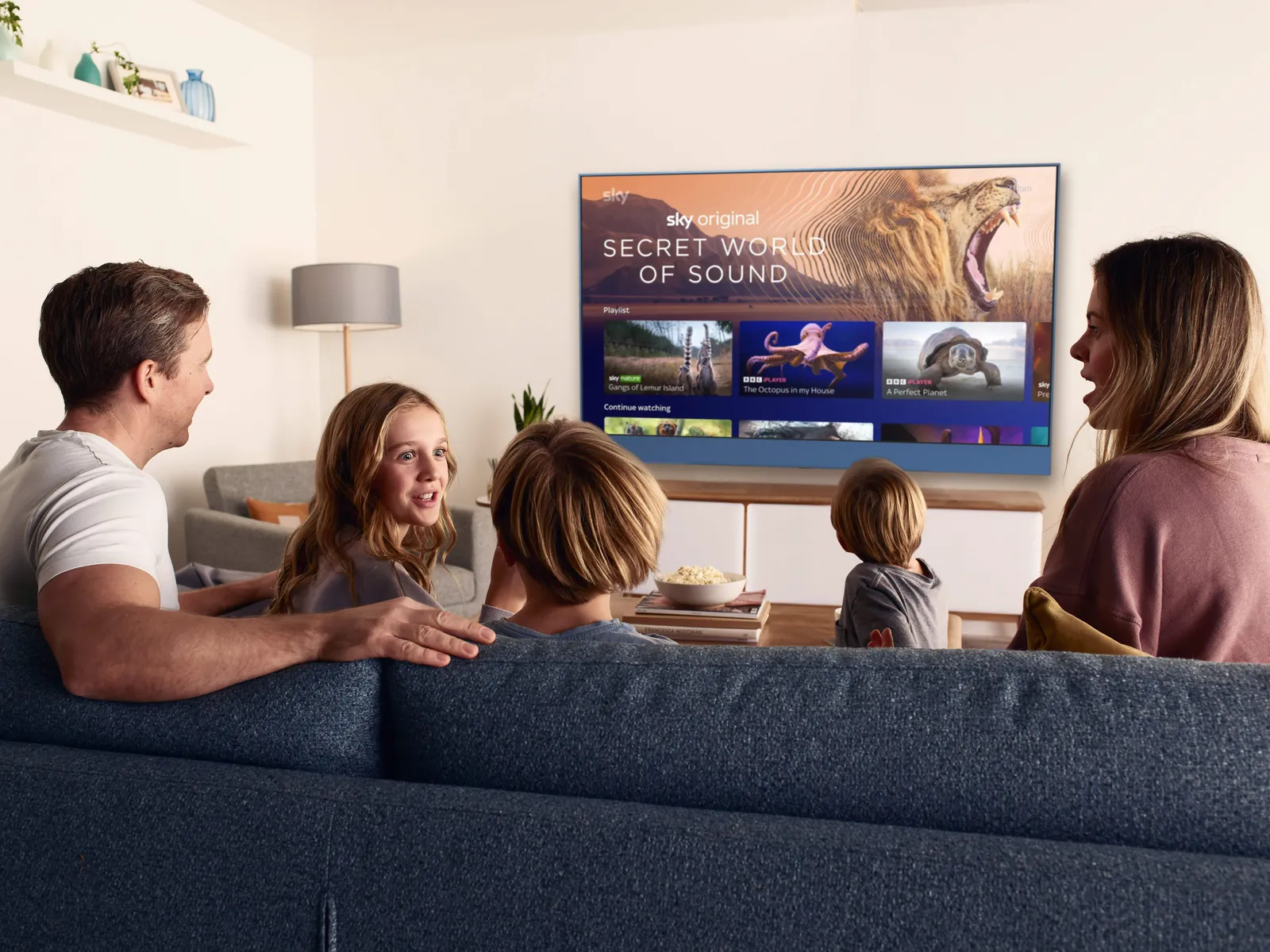
The second phase used Sky Live, the brand new camera mounted on top of the TV, to take the principle further.
The camera recognised who lifted the remote. A child reaching for it summoned their profile to the screen, with their subtitle preferences, their contrast settings, the apps they were allowed to open. An adult lifting it summoned theirs.
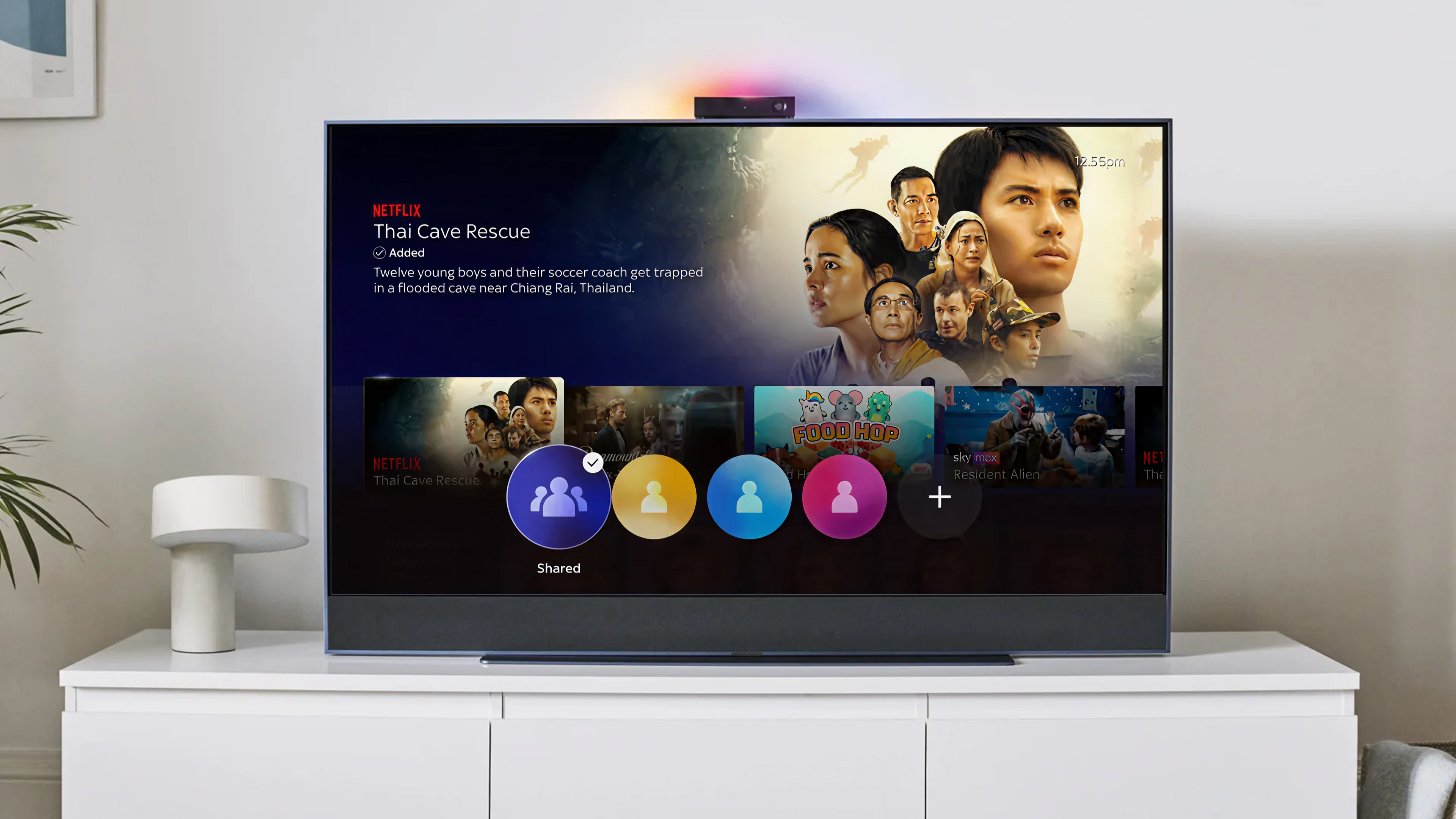
When more than one person was in front of the camera, the system did something different. It generated a profile for the family. Content and settings tuned to the household watching together rather than to the loudest voice in the room. Subtitles defaulted on if anyone in the room needed them. Audio guidance stayed live if anyone in the room used it. Recommendations took the youngest viewer seriously.
The household stopped having to choose between one person's experience and another's. The TV held all of them at once.
The need for inclusive design at the hardware level is not a niche concern. It is the conversation that consumer electronics has largely been avoiding.
According to the World Health Organization, 1.3 billion people live with significant disability. That is 16% of the world's population (WHO, 2023). In the UK alone, 16 million people are disabled, around one in four of the population (Scope, citing DWP Family Resources Survey). Over 2 million people in the UK live with sight loss (RNIB Sight Loss Data Tool). This is the user group Sky Glass's pre-known onboarding was designed first to serve.
The audience for accessibility features extends well beyond people who would describe themselves as disabled. A YouGov study commissioned by Stagetext in 2021 found that 80% of 18- to 25-year-olds use subtitles regularly, even though only around a quarter of that group is deaf or hard of hearing. The accessibility feature has become the mainstream feature.
The commercial case is sharper still. McKinsey's Next in Personalisation report found 71% of consumers expect personalised interactions with the brands they buy from, and 76% get frustrated when they don't get them (McKinsey & Company, 2021).
A TV that knows who is about to use it (before the box is opened, and again every time the remote is lifted) is not a niche feature. It is the experience the modern household has come to expect.
The work asked product design to think like a household, not like a user. That has stayed with me. Every product I have worked on since gets the same first question.
Not what does the user do. Who is in the room with them, and what is the room asking of this thing right now.
The lesson from Sky Glass was that inclusive design is not a feature you add later. It is a decision made before the product is sold.
Most products in health and wellness today are still designed for an able, tech-confident, time-rich user. The same person who downloads a meditation app at 7am and journals before lunch. That user exists. But the people who would benefit most from these products are not designed for at all. The older adult navigating chronic illness. The carer with no spare minutes. The household where one person is unwell and three are not.
When a product anticipates accessibility needs before the user has to ask, and when it can hold an entire household's preferences instead of one person's, the audience widens dramatically. People return because the product knows them. People share more because the product respects them. The product earns its way into rooms a generic one cannot enter.
Inclusive design is the whole design. Anything less is polish.
That is the principle I bring to every wellness brief I work on now.
Curious how this could apply to your business or project?